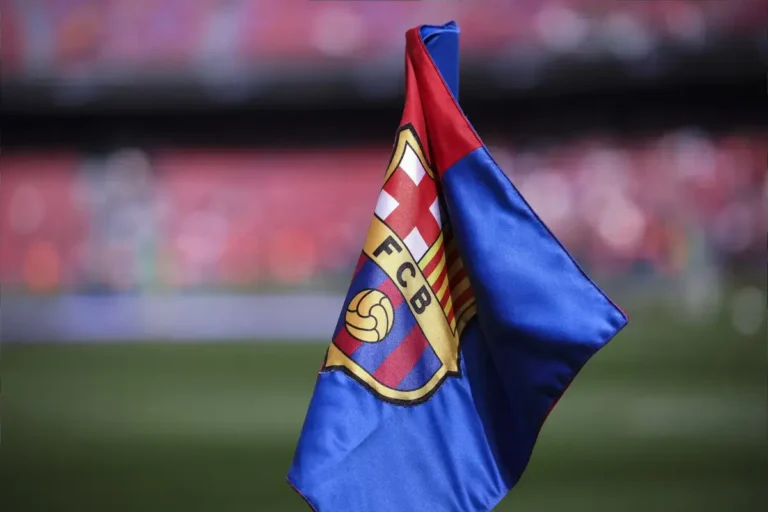
Barcelona’s name is once again being spoken among Europe’s financial heavyweights, at a time when stability off the pitch has become almost as important as success on it.
While attention often drifts towards transfer windows, debt restructuring and stadium delays, the club’s commercial engine has quietly been working overtime.
The Catalans have spent recent seasons under intense scrutiny, with every financial move dissected by rivals and observers alike.
Simply remaining competitive would have been viewed as progress by many inside the club.
Instead, Barcelona have managed to deliver a statement that goes far beyond survival.
The latest Deloitte Football Money League has now revealed that Barcelona finished the 2024–25 season as the second highest-earning club in European football, generating a remarkable €974.8 million in revenue.
That figure represents a dramatic return to the top three for the Blaugrana, who had not featured on the podium since the 2019–20 campaign and had slipped as low as sixth in the previous edition of the rankings.
In a list traditionally dominated by the same financial giants, Barcelona’s climb back to second place is being viewed internally as validation of their long-term recovery strategy.
Only Real Madrid, who once again topped the table with revenues of €1.161 billion, managed to outperform them.
For a club still navigating structural change, the achievement carries added weight.
What makes Barcelona’s rise particularly striking is the context in which it was achieved.
Throughout the season, the club were unable to play at Spotify Camp Nou due to ongoing renovations, a factor that significantly limited traditional matchday income.
Deloitte Money League rankings are built around three core revenue streams: matchday earnings, broadcasting income and commercial revenue.
With one of those pillars weakened, Barcelona were forced to lean heavily on innovation and off-field creativity to bridge the gap.
The strategy paid off handsomely.
According to the report, Barcelona recorded an increase of €114.5 million compared to the previous season, a surge largely driven by commercial activity rather than footballing circumstances.
A major contributor to that growth was the sale of VIP and premium seating packages linked to the revamped stadium project, offering long-term value to high-end supporters and investors.
Deloitte highlighted this shift clearly, noting that the club “reported a 27% increase in revenue compared to 2023–24, driven mainly by the introduction of Permanent Seat Licenses as part of the renovation of its stadium.”
The figures underline how Barcelona have monetised future infrastructure despite short-term disruption.
It is a model that many other clubs are now watching closely.
Completing the rest of the top five were Bayern Munich with €860 million, Paris Saint-Germain on €837 million, and Liverpool, the highest-ranked English side, with €836.1 million.
Barcelona’s position ahead of those clubs reinforces the scale of their commercial pull, even during a period of transition on and off the pitch.
While financial doubts have not disappeared entirely, the numbers suggest the club’s recovery is no longer theoretical.
Want to get the latest Barcelona news direct to your phone? Join our WhatsApp community by clicking here.